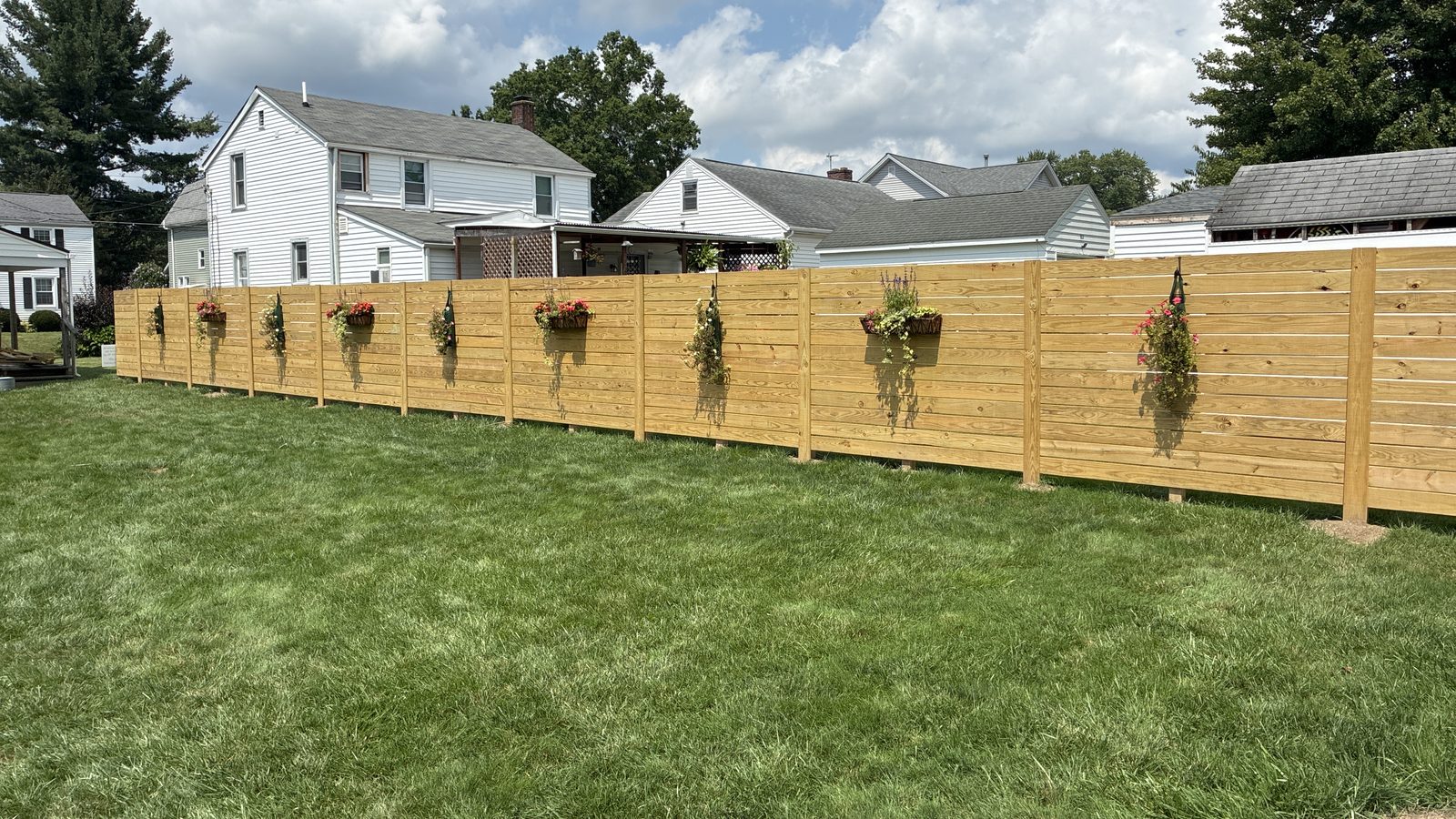
A wood fence doesn't fail all at once. It goes one post and one board at a time, which makes it hard to know whether you're looking at a Saturday repair or a full rebuild. Here's how we work it out when we come to quote.
1. Start with the posts
Posts are what matter. Boards and rails are cheap and quick to swap. Posts are what hold the fence up, and replacing one means digging and concrete.
Walk the fence and give each post a firm push. A good post barely moves. If it wobbles at the base or you can see the soil shift, that post is done. Then check for rot at ground level, which is where posts fail first. Push a screwdriver into the wood. If it sinks in easily or the wood feels soft, the post is rotted through.
If fewer than one in five posts are bad, repair usually makes sense. If it's more than a third, your money is generally better spent on a new fence than on chasing failures one section at a time.
2. Sight down the line
Stand at one end and look down the fence the way you'd check a board for straightness. One leaning section in an otherwise straight run is a local problem, usually a bad post or two. A fence that leans or waves along its whole length usually means the posts were set too shallow, and patching won't fix that.
3. Check how much wood is actually failing
Grey, weathered wood is not the same as broken wood. What matters is whether it's still doing its job. Look for:
- Boards so cupped or warped they no longer sit flat
- Splits around nails and screws where the fixing has torn through
- Soft spots you can press a thumbnail into
- Rails pulling away from the posts
A few bad boards? Replace the boards. Half the boards failing and the rails sagging? The fence has reached the end of its life.
4. Think about age and material
In our winters, a pressure-treated pine fence usually gives you 15 to 20 years. Cedar a little more. Untreated lumber a lot less. The freeze and thaw cycle is hard on the wood and harder on the fixings.
If your fence is past 15 years and needs several posts, repairs tend to become a yearly job. That's usually the point where replacing it is better value, even though the up-front cost is higher.
5. Be honest about how you want it to look
New wood won't match weathered wood. It'll be noticeably lighter for a season or two. That's fine for a back fence. If it's the one people see from the street, or you've been wanting a different style anyway, replacing gets you the look you actually want rather than a patched version of the old one.
So which is it?
Repair usually makes sense when the fence is under about 12 years old, most posts are solid, the damage is in one area, and you're happy with how it looks.
Replacement usually makes sense when several posts are rotted or loose, the fence leans along its length, a lot of the boards are failing, or you want a different style.
Two pictures will answer this faster than anything else. Take one down the length of the fence and one close up at the base of a post, send them over, and we'll tell you which way we'd go. If it's a close call, we'll quote both.